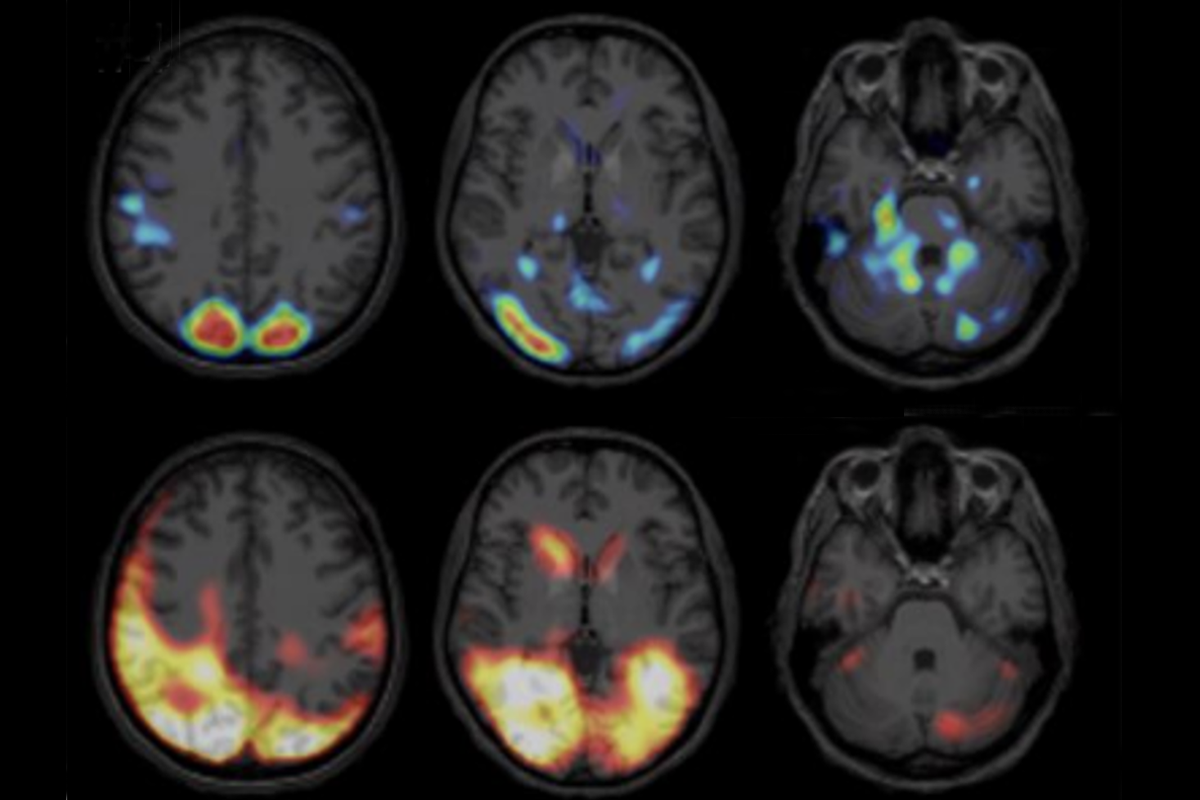
Alzheimer’s disease and related neurodegenerative disorders can involve several biological processes, including the accumulation of β-amyloid and tau as well as progressive neurodegeneration. Today, these processes are assessed using different biomarkers and imaging techniques, such as amyloid-PET, tau-PET, FDG-PET, MRI, and cerebrospinal fluid biomarkers. Although this approach provides valuable information, it can require multiple examinations and may be difficult to apply efficiently in individual patients. The researchers therefore asked whether a single PET examination could provide information on several components of the A/T/N framework: amyloid status, tau pathology, and neurodegeneration.
The researchers studied 129 patients with different tauopathies and 17 healthy controls using a 60-minute dynamic PET scan with the tau tracer [18F]PI-2620. By analysing how the tracer behaved over time, they derived three measures reflecting amyloid status, regional tau burden, and neurodegeneration. The results were compared with amyloid-PET, FDG-PET, MRI, and cerebrospinal fluid biomarkers and further tested in an independent cohort of 97 individuals.
Dynamic [18F]PI-2620 PET distinguished amyloid-positive 3/4-repeat tauopathies from amyloid-negative 4-repeat tauopathies, even when clinical presentations and conventional tau-PET patterns overlapped. A measure of tracer clearance predicted β-amyloid status with high accuracy and remained informative when tau-PET signals were visually negative or low. Other dynamic measures captured regional tau patterns and neurodegeneration. Combining all three measures enabled individualized three-dimensional A/T/N staging.
Dynamic [18F]PI-2620 PET could provide a “one-stop” approach for assessing amyloid, tau, and neurodegeneration during a single imaging session, potentially simplifying diagnostic workflows and supporting personalized disease profiling.