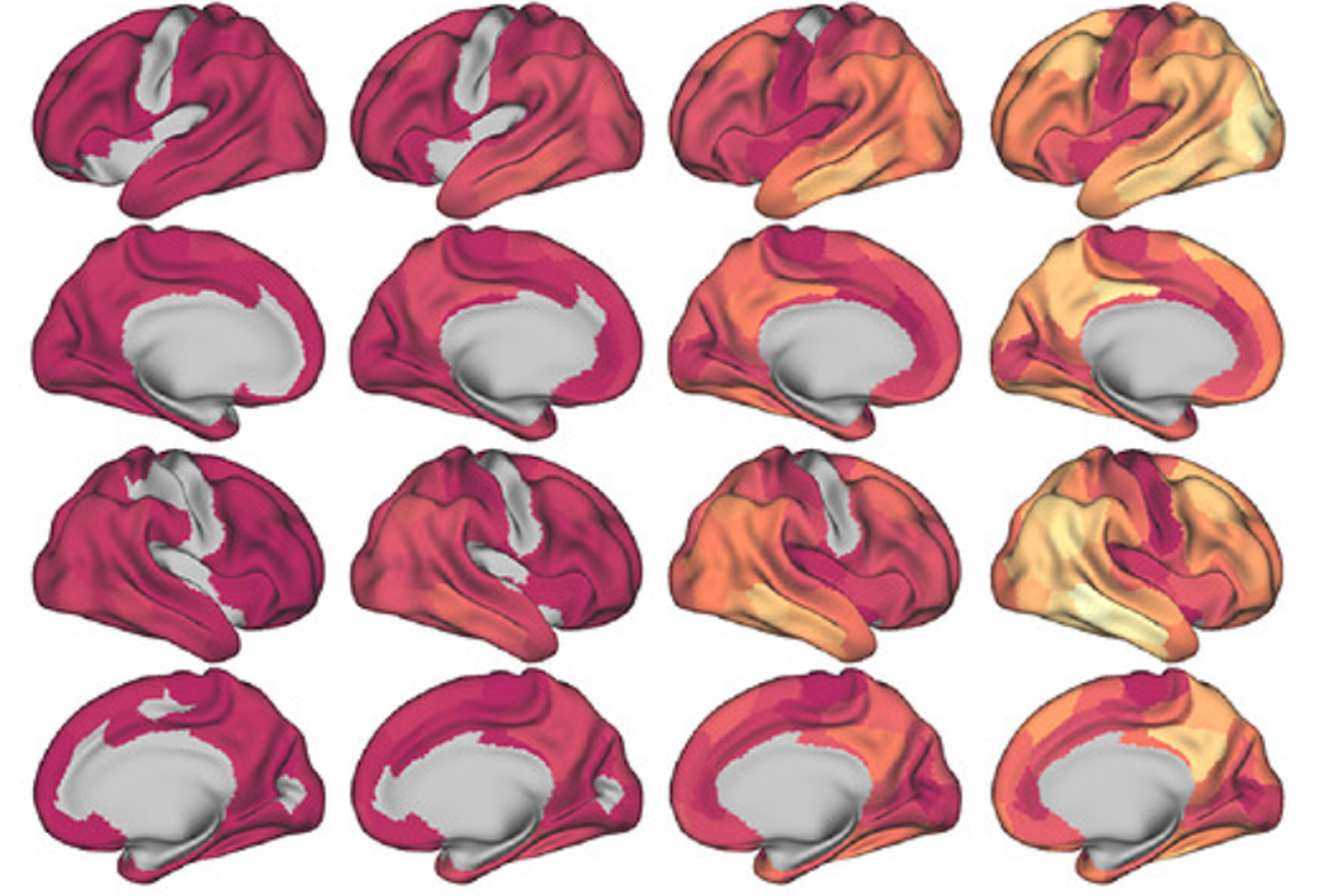
The accumulation of amyloid-beta and tau proteins is a defining feature of Alzheimer’s disease. While amyloid deposition is thought to trigger the spread of tau pathology through connected brain regions, patients show remarkable differences in the speed and extent of disease progression. The mechanisms underlying this variability have remained poorly understood. In particular, it was unclear whether the brain’s modular network organization—where tightly connected functional systems are linked by specialized connector regions—determines how efficiently tau pathology spreads beyond its initial sites and contributes to cognitive decline.
The researchers combined longitudinal amyloid and tau PET imaging data from two independent Alzheimer’s disease cohorts comprising 490 participants with multimodal brain connectomics. They developed a measure termed epicenter broadcast capacity, which quantifies whether early tau-affected regions preferentially communicate through cross-network connector hubs or remain largely confined within local brain networks.
Higher epicenter broadcast capacity predicted faster amyloid-related tau accumulation, more widespread tau propagation across the brain, and steeper cognitive decline. In contrast, stronger communication within local brain modules was associated with greater containment of tau pathology and slower disease progression. These findings identify brain network architecture as a key factor influencing individual differences in Alzheimer’s disease progression.
Brain connectivity influences how tau pathology spreads after amyloid accumulation. Mapping individual brain network organization could improve predictions of disease progression and help identify patients who may benefit most from targeted disease-modifying therapies.